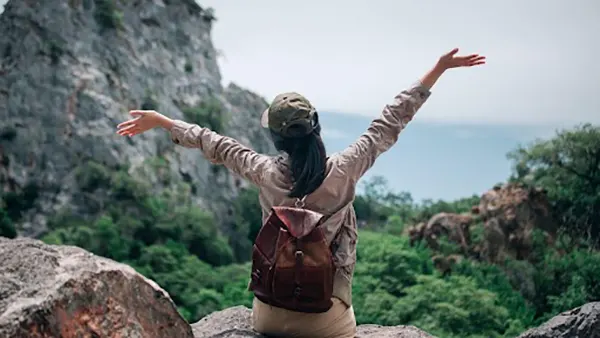
Are you amazed by the changing trends from group to solo trips, and wondering what the psychology is behind this? Then the answer is here.
According to solotravelworld, The Us solo travel market size is expected to expand at a CAGR of 12.4% from 2025 to 2030.
Therefore, this article intends to study the psychology behind solo travel, carry out a comparative analysis of this idea with group travel, and realize the practical benefits of solo travel and more!
Key Takeaways
- The core psychology of solo travellers
- A comparative analysis of group travel versus solo travel
- Personality traits and individual differences of a solo traveller
The Core Psychological Drivers Behind Solo Travel Preferences
When you ask why people travel alone, the answer varies person to person. Consider this: 76% of millennials are planning solo trips in 2025. This alone depicts that solo travel is becoming a topic in the town.
This tells us younger generations are exploring how they want to experience the world, and it connects to psychological needs that group travel just doesn’t fulfill.
Autonomy and Self-Determination Theory in Solo Travel
Autonomy sits at the core of human motivation. Researchers have established this for decades.
When you’re wandering through Tokyo or Barcelona by yourself, every choice is yours alone.
No debates about restaurants. No compromising on museums you don’t care about. No waiting involved, in short, if you want it, you fetch it.
This improves the self-determination —the idea that we thrive when we control our own decisions.
On one hand, group discussions require endless negotiations, whereas on the other hand, solo travel improves your decision-making skills.
Fun Fact :Around 84% of solo travellers are women.Brittany Ferries
Introspection and Self-Discovery Motivations
Solo trips become the gateway to a peaceful state of mind, which often tends to fade away when you are with others.
You don’t get involved in unnecessary conversations or have a constant need to socialize; you can simply be yourself.
Many travelers mention that having a prepaid esim strikes the right balance—they stay connected enough to feel safe but don’t sacrifice the solitude they’re seeking.
You check in when it matters without drowning in constant digital chatter.
That equilibrium between staying reachable and maintaining independence? It’s essential for the kind of introspection that changes you.
Brain science backs this up: solitary experiences strengthen how you understand yourself in ways shared experiences simply can’t replicate.
Escape from Social Performance Anxiety
Let’s be honest about something group travelers don’t usually mention. Keeping up your social game for an entire week is tiring.
Psychologists have a term for this: social fatigue. It affects everyone because being in a position to have social interactions all the time when you are there to enjoy can be very irritating at times.
Traveling alone removes that pressure completely. There’s no audience to perform for. You can be quiet, moody, spontaneous, or lazy without considering anyone else’s expectations or energy. And that freedom is what turns your travel into a worthy experience.
Comparative Analysis: Solo Trips vs Group Vacations
In order to have a comparative analysis of both solo and group travels, it becomes important that we understand the main guiding principles of both. This can be discussed as follows :
Decision-Making Freedom vs. Collaborative Planning
The idea of which travel suits you better relies on the facts of what you are seeking from that travel.
If you are trying to discover yourself, spending time with yourself, or practising independence, travelling solo might be for you.
It is appropriate for travelers who don’t mind being alone. Solo travel, with the right mindset, can transform your life.
On the other hand, if you are the kind of person who enjoys the company of others, likes experiences shared with others, or would prefer things organised for them, then group travel is the way to go.
Pace and Energy Management
Your internal rhythm is unique. Maybe you’re someone who pops out of bed with a desire to win over the world, or maybe you need two hours and multiple coffees before speaking to anyone.
Solo travel means you honor those rhythms, being apologetic about it.
When you align with your natural pace, stress hormones decrease. This is where your trip turns out your way instead of molding yourself and routine according to others.
Personality Traits and Individual Differences in Solo Travel Preferences
Every person has their own preferences, choices, and travel preferences . It is an expected phenomenon.
The Big Five Personality Framework and Travel Choices
Among personality traits, openness to experience and independence predict solo travel preferences most strongly. People with strong conscientiousness often value the planning and control solo travel provides.
There’s a broader cultural shift happening, too. Two out of five Gen Z-ers and millennials think marriage is an outdated tradition (bbc.com).
This reflects changing attitudes about independence that naturally extend into how people want to travel.
Life Stage and Developmental Psychology Factors
Quarter-life crises often show up as strong urges to travel alone. These aren’t about running away—they’re legitimate identity exploration processes that psychologists recognize as developmentally healthy.
Midlife solo trips serve similar functions, creating space for reinvention that group settings might prevent. Empty nesters frequently rediscover themselves through solo travel after spending years making family-centered decisions. It’s a return to self.
Practical Benefits of Solo Travel Backed by Psychology
The benefits of solo travel stick with you even after the travel journey is over.
Here are some practical benefits of the same :
Enhanced Problem-Solving and Resilience Building
The problems faced during solo travel, such as figuring out where to eat, clearing out navigation, and handling accommodation yourself,e tc, each challenge you solve independently.
Psychologists call this learned resourcefulness, and it gets stronger every time you successfully handle something solo that would’ve been delegated in a group.
Deeper Reflection and Life Clarity
A change in your daily routine creates spaces for different perspectives and ideas to flourish.
Solo travelers consistently report major insights about their careers, relationships, or life direction that completely eluded them at home.
New environments plus uninterrupted thinking time create conditions for clarity that group travel rarely, if ever, provides.
Comparison: Key Psychological Differences
| Aspect | Solo Travel | Group Travel |
| Decision Control | Complete autonomy | Requires consensus |
| Social Energy | Self-managed | Constant engagement |
| Reflection Opportunity | High | Limited |
| Stress from Compromise | None | Frequent |
| Pace Flexibility | Total | Negotiated |
| Authenticity Expression | Unrestricted | Socially moderated |
Final Thoughts on Solo Travel Psychology
The magnetic pull toward solo adventures isn’t random. It reflects fundamental human needs for autonomy, reflection, and authentic self-expression.
This isn’t about whether you’re capable of traveling with others—it’s about recognizing what your mind genuinely needs to rest, develop, and explore properly. The real question isn’t whether solo travel works for everyone.
1. Which term is used for a group intensive-traveller?
Ans: The term used for a group of travellers is Group Inclusive Traveller.
2. What are the negatives of solo travel?
Ans: It can involve various risks such as safety concerns, loneliness, extra costs, etc.
3. What are the types of trips?
Ans: The types of trips are: One-way and Multi-city trips
4. What is smarter travel?
Ans: Smarter travel is about getting the maximum benefit from a trip with the least impact on nature.